Know what you’ll monitor before your next model goes live.
We make clinical AI safer and easier to monitor.
So you can catch problems early and act with confidence.
Inputs
- Data
- Models
- Clinical context
- Risk priorities
- Evidence
- Policies & thresholds
- Who to monitor
- Language
- Voice
- Image
- Structured data
Outputs
- Evaluation
- Monitoring
- Safety signals
- Subgroup insights
- Alerts
- Migration analysis
- Governance evidence
- Doctors
- Auditors
- Governance teams
AI failures are already clinical failures.
-
Incident 1436
TruDi surgical navigation (opens in a new tab)
Allegedly showed the wrong instrument location during sinus surgery. The patient had a stroke; the maker disputes the cause.
-
Incident 1374
Hospital sepsis alert · dialysis patient (opens in a new tab)
Pushed aggressive IV fluids for a dialysis patient. A nurse spotted the overload risk in time.
-
Incident 1166
Sodium bromide advice (opens in a new tab)
A chatbot reportedly suggested bromide in place of table salt. The patient developed bromism and psychosis.
-
Incident 1281
Medication advice · transplant patient (opens in a new tab)
A transplant patient reportedly stopped their medication on chatbot advice. The graft failed.
-
Incident 124
Health-risk algorithm (opens in a new tab)
Used healthcare spending as a proxy for need, so it underestimated the needs of Black patients.
-
Incident 123
Sepsis prediction model · Michigan Medicine (opens in a new tab)
Many false alerts while many sepsis cases were missed: alert fatigue and missed deterioration.
From guesswork to continuous assurance.
Without safeAI
Higher risk. Less visibility.
- AI gets tested once before deployment.
- Quality gets judged by vibe checks.
- Generic benchmarks define AI quality.
- Safety failures can go unnoticed.
- Evaluations aren’t tailored to workflows.
- Model providers become trusted sources.
- Subgroup performance remains largely invisible.
- Production changes rarely trigger re-evaluation.
With safeAI
Continuous insight. Greater impact.
- AI gets continuously evaluated in production.
- Quality reflects real-world clinical performance.
- Hospitals define their own evaluations.
- Safety-critical failures get actively monitored.
- Models are tested across specific subgroups.
- Independent engines verify evaluation evidence.
- Drift and degradation trigger investigation.
- Every decision creates an audit trail.
From data to safer care
A continuous loop of evaluation, monitoring, and learning — across every model, modality, and clinical use case.
- 01Ingest
- 02Define
- 03Evaluate
- 04Verify
- 05Approve
- 06Deploy
- 07Monitor
- 08Detect
- 09Investigate
- 10Act
- 11Learn
- 12Migrate
Your clinical teams decide what matters.
And when something changes, they know whether it matters.
Before go-live
- 1
AI proposes
Monitor candidates, subgroups, failure classes and sampling plans.
- 2
Verification checks
Backtesting and recomputation before anything is adopted.
- 3
Clinicians approve
Approval sits with the people accountable for care.
After go-live
- 4
Assess the severity
Thresholds and risk tiers set the alert level and confidence.
- 5
Route and investigate
The right clinician, model owner or governance team gets the cases and evidence.
- 6
Act and learn
Review, hold, roll back or recalibrate. Outcomes refine future monitors.
Evaluation runs on private, institution-specific datasets and challenge sets built from your own evidence. Data never leaves your premises.
Six families of monitors.
First we evaluate and set a baseline. Then our agents continuously monitor it, as per the guidelines you set.
-
Performance & calibration
Within bounds
-
Output quality
Within bounds
-
Safety & uncertainty
Within bounds
-
Robustness
Within bounds
-
Subgroup equity
Within bounds
-
Drift
Out of bounds
Clinical safety is a multidisciplinary problem.
Clinicians, AI safety researchers, statisticians, engineers, governance leaders and product builders working on one problem: making clinical AI oversight scalable.
Core team
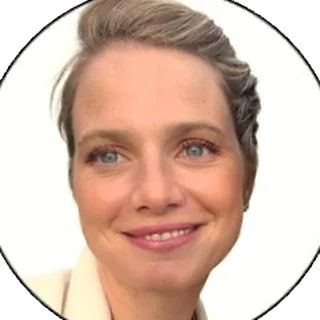
Lara Grosso
Harvard DrPH, Founder, CEO
DrPH at Harvard in AI & patient safety. 10+ years in global health (World Health Organization, CHAI) across 7 countries.
LinkedIn: Lara Grosso (opens in a new tab)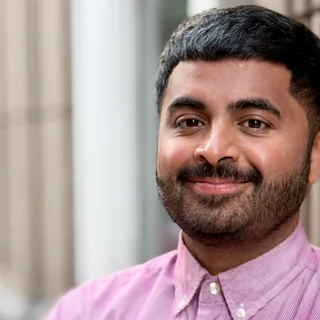
Luke Payyapilli
Infrastructure Engineering Leader, Harvard-MIT
Software engineering leader focused on scaling cloud infrastructure. Has led product-driven engineering at multiple successfully acquired companies.
LinkedIn: Luke Payyapilli (opens in a new tab)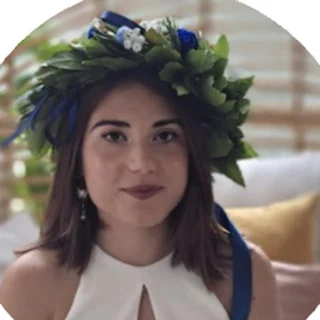
Francesca Mussa
Harvard PhD, Chief AI Scientist
PhD, AIM Harvard–BGB. Statistician building clinically meaningful medical AI, grounded in physiology & patient care.
LinkedIn: Francesca Mussa (opens in a new tab)
Tirtha Pani
Member of Technical Staff
AI Safety scientist building machine learning systems to improve outcomes for people with chronic disease.
LinkedIn: Tirtha Pani (opens in a new tab)
Isabelle Schulte
Harvard MPH, Head of Business Development
Leads business development, fundraising, hospital partnerships, and GTM strategy. 8+ years in healthcare operations and transformation.
LinkedIn: Isabelle Schulte (opens in a new tab)
Filippo Bargagna
AI Safety Scientist | Research Fellow @ UNIPI
Supports the technical development of the safeAI platform and its alignment to the clinical workflow. Research Fellow on ML and Signal Processing at UNIPI.
LinkedIn: Filippo Bargagna (opens in a new tab)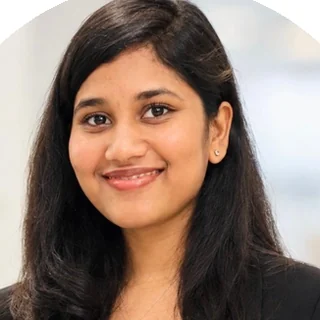
Sanjana Patnam
AI Safety Engineer Intern
Researches clinical AI failure patterns and builds evaluation frameworks for safeAI. Graduate student at Northeastern University in Data Analytics Engineering.
LinkedIn: Sanjana Patnam (opens in a new tab)
Tajvir Chahal
AI Safety Engineer Intern
Building bias/equity audits for safeAI’s clinical AI platform. Background in data analysis; studying Machine Intelligence at Northeastern, with a B.S. in Computer Science from Rutgers.
LinkedIn: Tajvir Chahal (opens in a new tab)
Jonathan Lee
Business Development and Fundraising Intern
Supporting the development of business operations and fundraising of safeAI. Undergraduate student at Northeastern University majoring in Finance.
Clinical partners
Mayo Clinic
Clinical validation partner
Ranked the #1 hospital in the world by Newsweek for eight consecutive years and a perennial U.S. News & World Report Honor Roll hospital.

Humanitas AI
Applied clinical AI research
The AI Center of Humanitas Research Hospital, a leading Italian academic hospital network spanning 12 hospitals.
Advisors
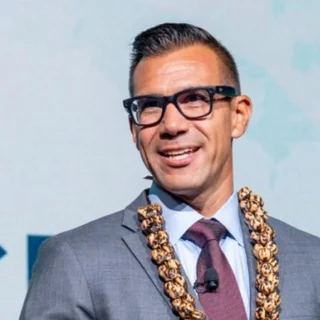
Brian Anderson, MD
CEO & Co-Founder, Coalition for Health AI (CHAI)
A physician and digital health pioneer helping shape national standards for trustworthy, safe and effective AI in healthcare. Previously Chief Digital Health Physician at MITRE and head of Informatics and Network Medicine at athenahealth. Harvard Medical School graduate.
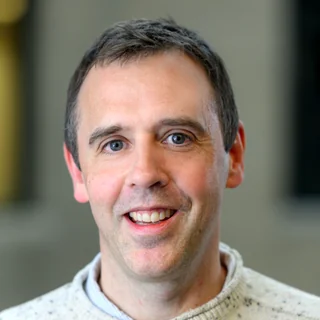
Tom Pollard
Research Scientist, MIT · Technical Director, PhysioNet
Technical Director of PhysioNet and a contributor to the landmark MIMIC clinical databases. Instructor in Biostatistics at Harvard T.H. Chan School of Public Health, with a PhD in computational modelling of patient physiology.
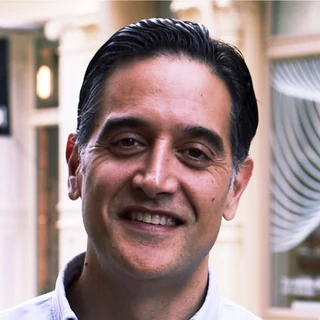
Cyrus Massoumi
Founder & CEO, Dr. B · Founder & Former CEO, Zocdoc
A healthcare entrepreneur and investor who founded Zocdoc and went on to build Dr. B. Founder and Managing Partner of humbition, and a Senior Advisor to Columbia University’s Mailman School of Public Health.
Awards and accelerators.
- Winner · 2025
Harvard Innovation Fund Competition
- Winner cohort · 2025
Harvard HealthLab Accelerators
- Semifinalists · 2026
President’s Innovation Challenge
See it on your own models and data.
Bring us a model, a dataset, or a production monitoring problem. We’ll map the evidence, risk, failure modes, and oversight workflow.
Book a Safety ReviewAI compliance advisory.
Rules for clinical AI are changing on both sides of the Atlantic. We help hospital teams work out which requirements apply to each system, and what evidence to keep.
EUEuropean Union
- EU AI Act duties for high-risk AI
- Medical Device Regulation for AI software
- GDPR for health data
USUnited States
- FDA expectations for AI-enabled device software
- HIPAA privacy and security
- Federal and state rules on bias and transparency
Requirements depend on the system, its intended use and where it is deployed.